

President Donald Trump cast CIA Director John Ratcliffe’s trip to Russia as routine and rejected the idea that Moscow might attack a NATO member, even as unnamed U.S. officials told multiple outlets the visit carried a warning to the Kremlin, according to Antiwar.com.
Trump: ‘I am not concerned … at all’
Asked by Axios reporter Barak Ravid if he was concerned Russian President Vladimir Putin would authorize an attack on a NATO state, Trump replied, “I am not concerned … at all. There is no problem.”
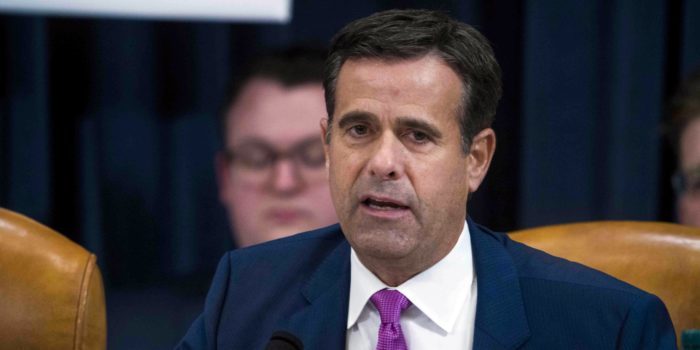
Trump also denied that Ratcliffe had delivered any message to Moscow. “Ratcliffe sees his Russian counterpart once every six months or once every year. They have a very good relationship. There was no message and there was nothing unusual,” he told Axios.
Unnamed officials reportedly claimed the trip was a warning
Ratcliffe traveled to Moscow to meet with his Russian counterpart on Tuesday, Antiwar.com reported. While the details of their discussion were not initially made public, Antiwar.com wrote that on Wednesday U.S. officials told multiple outlets Trump had dispatched Ratcliffe to warn Russia not to attack any NATO countries. Trump disputed that characterization in his Axios interview.
Kremlin-linked voices issue separate cautions
Amid tensions over Western support for Ukraine, former Russian Deputy Foreign Minister and current Kremlin adviser Andrei Fedorov warned the UK that “unknown sources” could target arms facilities producing weapons for Ukraine. “Something might happen with enterprises, with factories, which are producing drones for Ukraine,” Fedorov told the BBC on Monday. “They could be attacked — not by Russia, but from unknown sources.” He suggested such action might be “semi-military,” potentially a cyber operation without “official” approval from Moscow, and argued that Putin faced increased public pressure in Russia to take action against the UK.
Separately, Russian Foreign Ministry spokeswoman Maria Zakharova said Tuesday that the UK and France were “playing with fire” by agreeing to allow Ukraine to produce long-range cruise missiles, according to Antiwar.com.